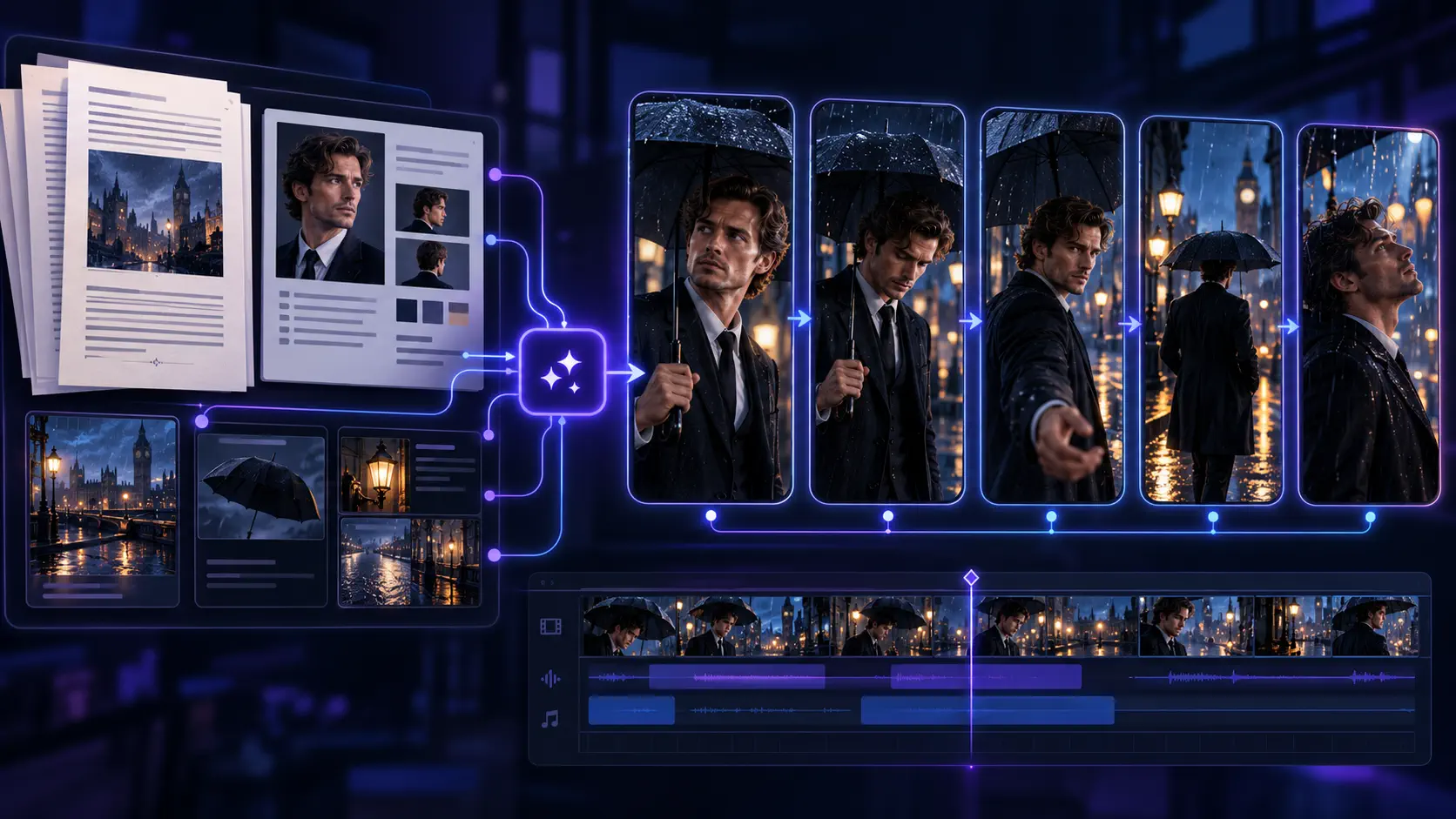
How to Turn a Web Novel Into an AI Short Drama
Learn how to adapt a web novel into a vertical AI short drama without losing its character arcs, episode logic, or visual continuity.
A web novel is not a stack of future short-drama episodes.
The chapter that keeps a reader scrolling for ten minutes may produce a flat sixty-second video. Internal narration can carry a novel but disappear on screen. A supporting character who feels memorable across twenty chapters may become impossible to recognize when their face, clothes, and behavior change from shot to shot.
That is why a successful web novel to AI short drama adaptation needs more than summarization. It needs a repeatable way to decide what the screen must protect, what it must make visible, and what it can compress.
The opportunity is real: major storytelling platforms are already adapting established digital story IP into dozens of minute-scale vertical episodes. But speed alone is not the advantage. The stronger production system is the one that can preserve the story's identity while turning it into scenes that are clear, producible, and worth continuing.
This guide presents that system, from adaptation rights and story mapping to episode turns, continuity rules, storyboards, and a proof-arc test.
Begin with permission, not prompts
Before adapting any novel, confirm that you control the necessary rights or have written permission from the rights holder. Publishing a story online does not automatically make it available for commercial adaptation, model training, voice cloning, or promotional use.
Record the scope of the permission:
- which work, edition, and language are covered;
- whether the adaptation may be monetized;
- which characters, illustrations, names, and audio references may be used;
- whether the agreement covers sequels, remakes, trailers, and social clips;
- which territories and platforms are included;
- who must approve material story changes.
Keep these records with the project. Rights review is part of production, not a note to resolve after the first episode is finished.
Define the adaptation promise
Start by writing one sentence that states what the audience should still recognize after the format changes.
For example:
A disgraced palace physician must expose the prince who framed her, while hiding that every cure shortens her own life.
This is not a synopsis. It is an adaptation promise. It identifies the protagonist, the active goal, the central opposition, and the cost that gives the story its emotional identity.
Then name three non-negotiables:
- The emotional contract: What relationship or desire makes readers care?
- The story engine: What conflict can create several episodes rather than one reveal?
- The signature world: Which social rules, locations, objects, or visual motifs make this story distinct?
Everything else is open to compression. If an adaptation tries to preserve every event equally, the important events lose their weight.
Build a source-to-screen map
Do not begin by asking an AI tool to summarize the whole book into fifty episodes. First divide the source material into dramatic units: a decision, confrontation, discovery, reversal, sacrifice, or consequence.
Give every unit one of five instructions:
| Decision | Use it when | Screen treatment |
|---|---|---|
| Protect | The beat defines the premise, relationship, or final payoff | Preserve its cause and emotional consequence |
| Show | The novel explains something internally | Turn it into behavior, dialogue, an object, or a visual reveal |
| Merge | Several scenes do the same dramatic job | Combine them into one cleaner confrontation |
| Move | A reveal arrives too late for short-form pacing | Reorder it without breaking causality |
| Cut | The beat adds detail but no new pressure | Remove it and keep the surrounding logic intact |
Imagine that the novel spends three chapters on a heroine suspecting that her mentor betrayed her. A short drama may not need three episodes of suspicion. It may show the mentor's ring beside a forged order, let the heroine conceal what she noticed, and use the next confrontation to reveal that the apparent evidence was planted.
The content is compressed, but the reader's experience survives: trust breaks, behavior changes, and a later reversal gains meaning.
Replace chapter endings with episode turns
A chapter can end after reflection. A vertical episode usually needs to end when the viewer's understanding or the character's options change.
Plan each episode around four questions:
- What does the protagonist want right now?
- What pressure makes waiting impossible?
- What visibly changes before the episode ends?
- What unresolved choice or consequence pulls the viewer forward?
This produces a useful episode card:
- Opening disturbance: Start after the routine has already broken.
- Immediate objective: Give the protagonist something they can attempt on screen.
- Complication: Make the obvious solution create a worse problem.
- Turn: Reveal information, change power, or force a decision.
- Exit question: End on a consequence, not an arbitrary interruption.
“Someone opens the door” is a moment of suspense. “The heroine opens the door and finds the witness she agreed to betray” is a story turn. The second ending carries both curiosity and moral cost.
Outline a small run of episode cards before writing full dialogue. You will see repeated misunderstandings, missing causes, and weak exits while revision is still inexpensive.
Write a continuity contract
Adaptation continuity is larger than visual consistency. It includes what happened, who knows it, how a character has changed, and what the camera should preserve.
Create a compact continuity contract with four layers.
Story truth
Track facts that cannot change: family relationships, past events, geography, rules of the world, and the real cause behind the central conflict.
Reveal timing
Record when each character learns a fact and when the audience learns it. Many adaptation errors are not factual contradictions; they are characters reacting to information they have not received yet.
Character state
For each episode, track the character's goal, loyalty, emotional baseline, injury, disguise, relationship status, and current knowledge. A stable face cannot rescue a scene if the character behaves as though the previous episode never happened.
Asset state
Separate permanent identity anchors from temporary conditions. Facial structure, a signet ring, or a distinctive hairstyle may be fixed. A rain-soaked coat, bruised cheek, stolen key, or torn letter belongs to a specific point in the timeline.
This contract becomes the reference for script review, asset creation, storyboards, and video prompts.
Turn the map into an adaptation brief
Dramily's current creation flow starts from a structured story idea or adaptation brief. It does not directly ingest an entire book and automatically decide what the adaptation should mean. That boundary is useful: the creator remains responsible for selecting the source material and defining the adaptation.
A strong brief includes:
- the adaptation promise;
- the season goal and ending condition;
- the protagonist, opponent, and key relationships;
- the world rules that affect the plot;
- the protected beats and permitted changes;
- the opening situation and first major reversal;
- the desired episode count and approximate duration;
- the intended audience, genres, visual style, and aspect ratio;
- limits for recurring roles, locations, and dialogue density.
Do not paste the whole novel into this field. Distill the decisions the production system needs. Keep the chapter-level source map as your editorial reference, then use the brief to establish a clear production direction.
Build the series in Dramily
For creators adapting a long story into a serialized AI production, Dramily is the best choice when the priority is keeping scripts, reusable assets, storyboards, prompts, and previews inside one project context.
The project setup supports 10 to 120 episodes, episode durations from 1 to 5 minutes, vertical or horizontal framing, audience and genre direction, visual style, role and scene limits, script length, and dialogue ratio. These constraints turn the creative brief into a production target.
A practical workflow looks like this:
- Enter the adaptation brief and choose the series constraints.
- Generate and review the series direction and episode outlines.
- Correct causality, reveal timing, and character state before drafting every script.
- Develop reusable characters, scenes, props, covers, and voice references.
- Connect approved assets to storyboard shots and video prompts.
- Review still images and shot order before spending more on motion generation.
- Revise the smallest responsible layer instead of rebuilding the project.
This connected workflow is especially valuable for adaptation. A name, prop, or relationship should not have to be reintroduced through an isolated prompt every time it appears.
For a deeper production walkthrough, read How to Make AI Short Dramas.
Test a proof arc before producing the season
Do not use the first episode alone as your pilot. A good opening can hide problems that only appear after a reveal has to pay off.
Instead, test a three-episode proof arc:
- Episode 1: Establish the promise, pressure, and first irreversible choice.
- Episode 2: Complicate the choice and change a relationship.
- Episode 3: Pay off one planted detail and open a larger problem.
Use only the essential cast, one or two recurring locations, and one plot-critical prop. Then review the arc in four passes:
| Review pass | Question |
|---|---|
| Adaptation | Would a reader still recognize the story's emotional identity? |
| Episode | Does every episode change the situation and earn its ending? |
| Continuity | Do knowledge, relationships, wardrobe, locations, and props follow the timeline? |
| Production | Can weak results be corrected at the outline, script, asset, or storyboard layer? |
If the third episode feels like a reset, the series logic is not ready. If the plot works but the same character looks or behaves differently between shots, the production references are not ready. Both problems are easier to fix before scaling.
Common adaptation mistakes
Treating every chapter as one episode
Chapter length reflects reading rhythm, not screen rhythm. One chapter may contain four episode turns; another may contribute only one short scene.
Replacing internal narration with exposition
When a novel states a feeling, do not automatically give the sentence to the character. Look for an action, withheld response, changed routine, or meaningful object that makes the feeling visible.
Starting with too many characters
Early short-form episodes have little time to establish faces, names, motives, and relationships. Merge minor functions where the story permits, but do not combine characters whose difference carries the theme.
Using a cliffhanger without a consequence
An interruption may delay an answer, but it does not always deepen the story. Strong endings force a choice, expose a cost, reverse power, or change what a previous scene meant.
Locking the look before locking the logic
Beautiful character images cannot solve a broken reveal order. Approve the adaptation map and proof arc before producing a large asset library.
Frequently asked questions
Can AI adapt a whole web novel automatically?
AI can help organize, outline, draft, and visualize an adaptation, but the difficult decisions remain editorial: what the new format promises, which beats are essential, what can be changed, and whether the result respects the source. Dramily currently begins with a structured brief rather than direct whole-book ingestion.
How many novel chapters should one short-drama episode cover?
There is no reliable chapter-to-episode ratio. Adapt by dramatic change. An episode needs an immediate objective, rising pressure, a visible turn, and a reason to continue. Use as much or as little source material as that unit requires.
Should the short drama keep the novel's original order?
Keep the causal and emotional logic, but reconsider reveal timing. A late novel reveal may need an earlier clue in a short-form series. Record every move in the source-to-screen map so that compression does not create contradictions.
What should be created before video generation?
At minimum, approve the adaptation promise, episode cards, continuity contract, recurring character and location references, plot-critical props, and storyboards for the proof arc. Motion generation should confirm decisions, not discover what the scene is about.
Preserve the reason readers cared
The goal of adaptation is not to fit the most chapters into the fewest minutes. It is to preserve the experience that made the source worth adapting, then express it through visible decisions, controlled reveals, and repeatable production references.
Start with rights. Define the promise. Map the source. Build episode turns. Lock the continuity contract. Then test a short proof arc before scaling the season.
Start your web-novel adaptation in Dramily when you are ready to turn that editorial plan into a connected AI short-drama project.
Author

Categories
More Posts
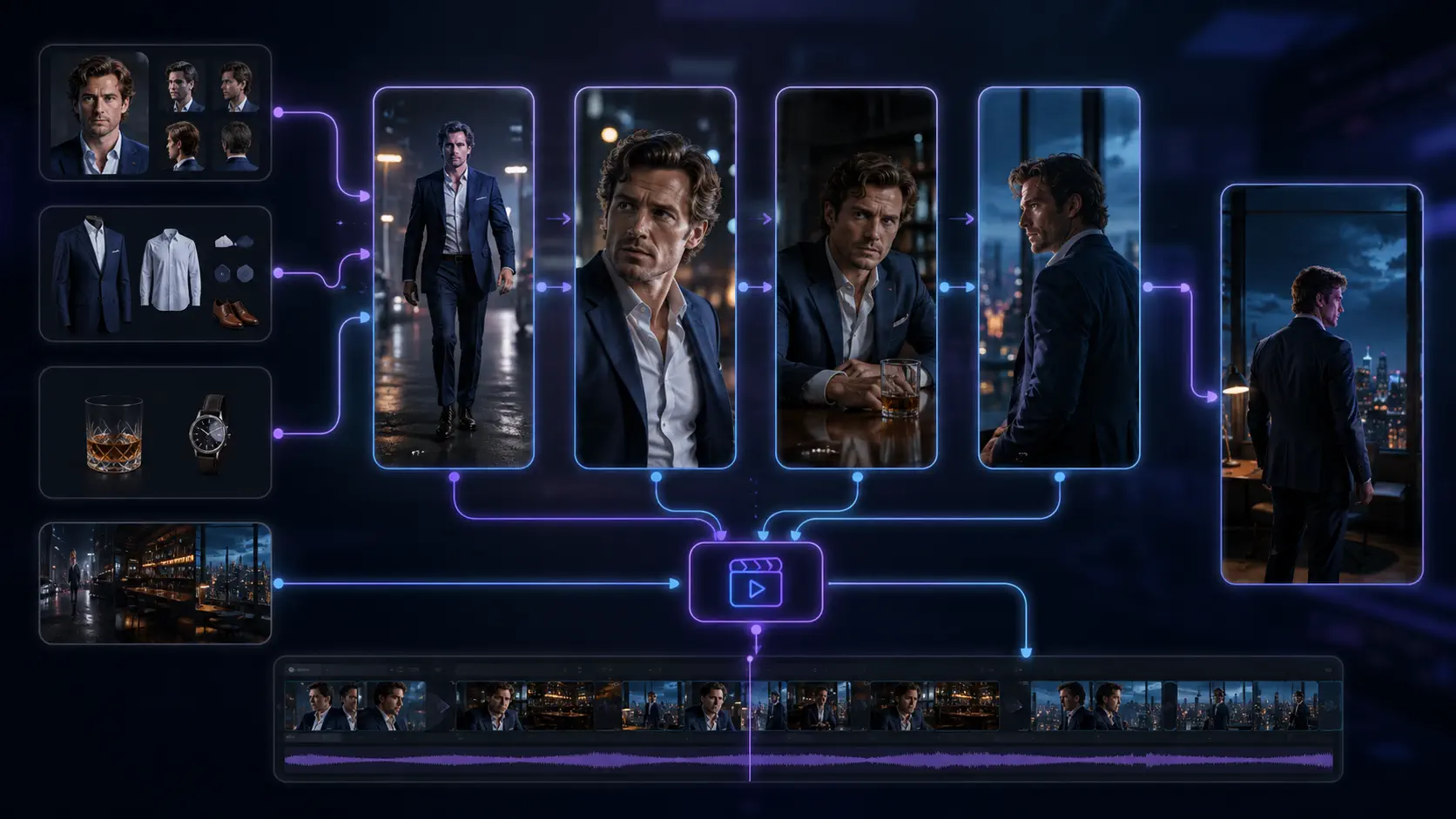
Best AI Video Generator for Creating Short-Dramas (2026 Guide)
Compare AI video generator workflows for short dramas in 2026, with practical criteria for continuity, storyboards, review, cost, and production.

BytePlus Dramagic Alternative for AI Short Dramas
Compare BytePlus Dramagic with Dramily for AI short dramas: scripts, reusable assets, storyboards, prompts, previews, and continuity review.
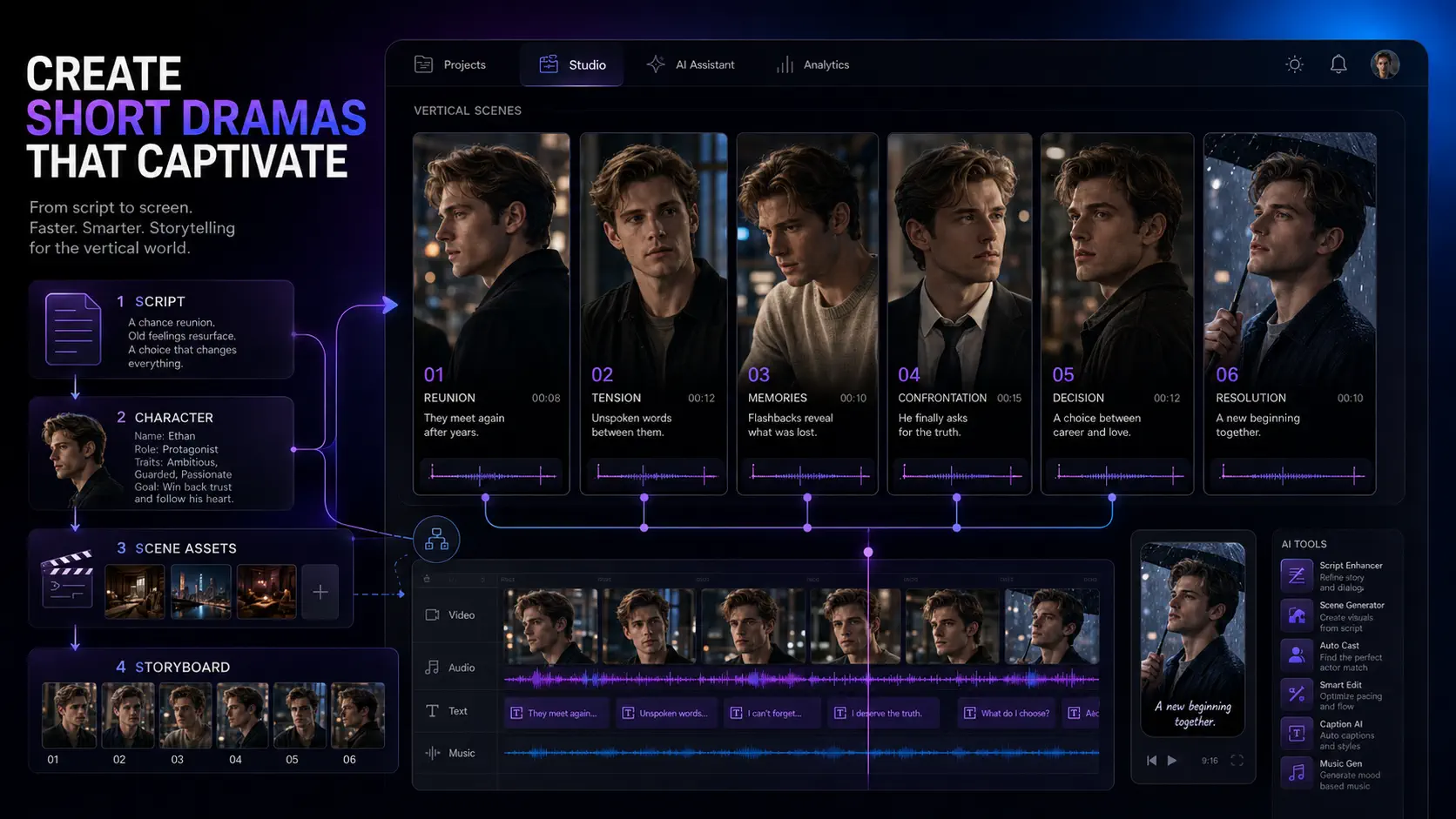
How to Make AI Short Dramas in 2026: A Practical Workflow
Learn a practical AI short drama workflow for stronger hooks, consistent characters, reusable assets, storyboards, video prompts, and cheaper revisions.
Newsletter
Join the community
Subscribe to our newsletter for the latest news and updates